
Tu Bishvat, often referred to as the “New Year for Trees“, is a Jewish holiday celebrated on the 15th day of the Hebrew month of Shevat. It marks the beginning of the agricultural cycle in Israel, especially for fruit trees. Tu Bishvat holds a special place in Jewish tradition as a day to appreciate nature and reaffirm the connection to the land and its produce.
Historically, Tu Bishvat was significant for tithing purposes. In ancient times, farmers would bring their first fruits to the Temple in Jerusalem as an offering. Tu Bishvat helped determine the age of a tree and, consequently, whether its fruit could be tithed. This practice also aligns with the biblical commandments regarding the treatment of fruit trees.
Over time, Tu Bishvat has evolved into an ecological and environmental awareness day. Many Jewish communities worldwide celebrate by planting trees and participating in environmental activities, reflecting a renewed commitment to caring for the Earth.
Almond Trees and Tu Bishvat
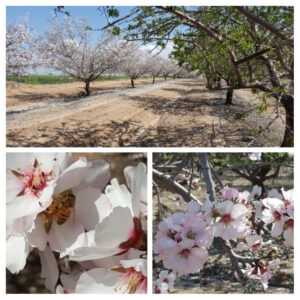
One of the most iconic symbols of Tu Bishvat is the almond tree, known as “shaked” in Hebrew. The almond tree is one of the earliest to bloom in Israel, often heralding the coming of spring. Its delicate white and pink blossoms are a beautiful sight during Tu Bishvat, signifying renewal and rebirth.
The almond tree’s early bloom is poetically linked to the themes of Tu Bishvat, as it embodies the potential for growth and new beginnings. In many Tu Bishvat celebrations, the almond tree is honored through traditional foods and customs. For instance, it is common to eat almonds and other dried fruits, which symbolize the bounty of the land.
Celebrations and Traditions
Tu Bishvat seders, modeled after the Passover seder, have become popular in recent years. During these seders, participants consume various fruits and nuts, especially those associated with the Land of Israel, such as figs, dates, pomegranates, olives, and, of course, almonds. The seder typically includes four cups of wine, moving from white to red, symbolizing the changing seasons.
Additionally, Tu Bishvat is an opportunity for Jewish communities to engage in ecological projects. Tree planting ceremonies, environmental education programs, and clean-up activities are common ways to honor the holiday. These activities promote a deeper connection to nature and a sense of responsibility towards the environment.
In summary, Tu Bishvat is a celebration of nature, renewal, and the enduring bond between the Jewish people and their land. The almond tree, with its early blossoms, serves as a beautiful and fitting symbol of this holiday, reminding us of the perpetual cycle of growth and rebirth. So, as we celebrate Tu Bishvat, we also embrace the opportunity to nurture and protect our environment for future generations.